A San Diego cabinet refacing quote should reflect visible scope, not a countywide price guess. No verifiable San Diego County or City of San Diego rate for kitchen cabinet refacing cost appeared in the approved research, so we won’t invent one. The independent remodeler sets the total from measured openings, selected materials, preparation, hardware, finish work, and documented repairs.
What a refacing quote covers
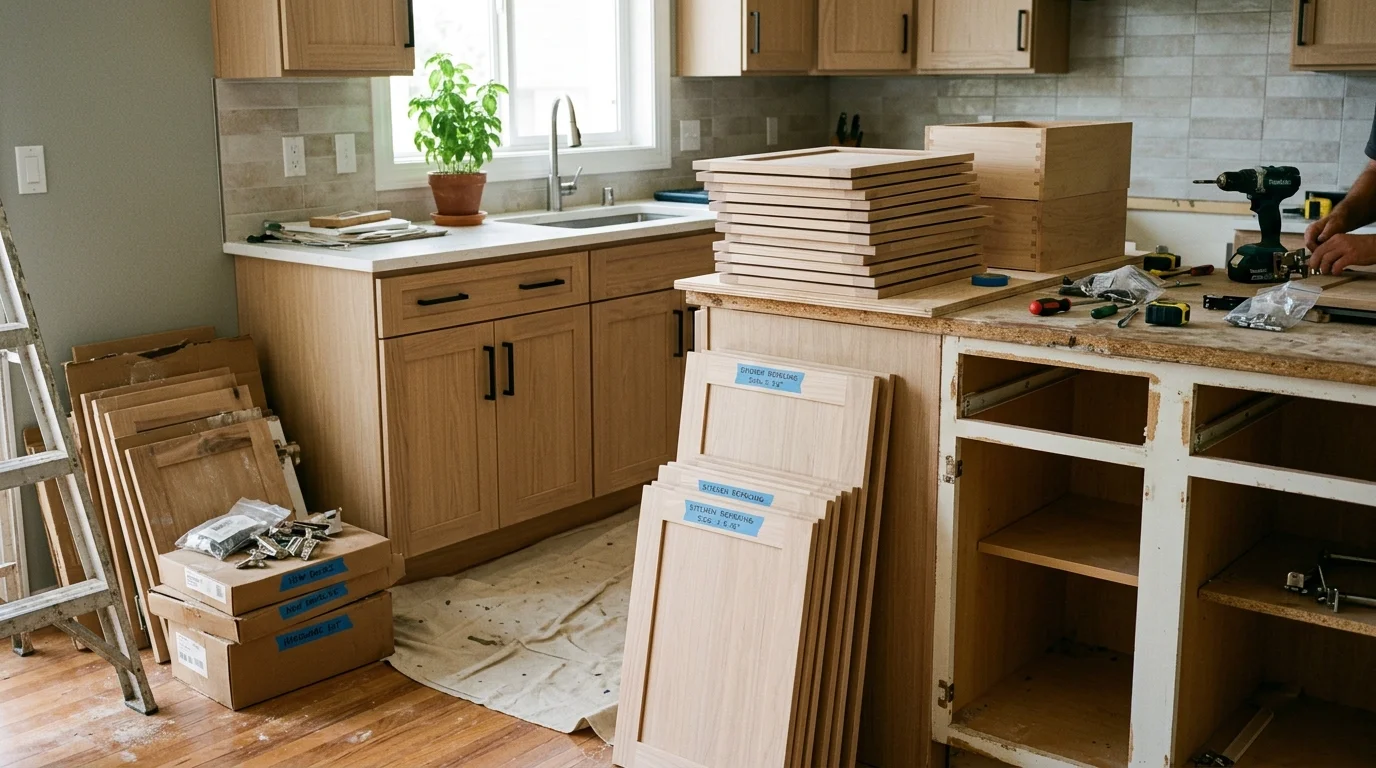
Start with what stays. The written quote should identify every cabinet box being retained. It should also describe the visible surfaces receiving new material. That may include face frames, exposed ends, toe kicks, fillers, and trim. If an island or pantry is included, it should appear separately.
Next, look for a complete list of new components. Doors and drawer fronts shouldn’t be grouped under a vague cabinet allowance. The quote should name their material, style, finish, and quantity. It should also explain whether hinges, pulls, knobs, and drawer hardware are included.
Preparation deserves its own line. Ask how the remodeler will handle loose surfaces, old coatings, damaged edges, or panels needing repair. Any condition that could change the total should be documented before work begins. If the pro can’t see part of a box during the first visit, ask how later findings will be priced.
The proposal should identify excluded work too. Countertops, backsplashes, flooring, appliance connections, and interior cabinet accessories aren’t automatically part of refacing. A detailed exclusion list prevents two very different scopes from looking equal.
Jobsite access can affect the written scope. A downtown San Diego condo may require an elevator or parking plan. A house in inland East County may have another access setup. If access changes the work, it belongs in the proposal.
Our kitchen cabinet refacing service connects San Diego County homeowners with licensed independent remodelers. The customer contracts with and pays the matched professional directly.
Veneer, thermofoil and solid wood doors
Material names need detail before they help you compare costs. “Wood,” “thermofoil,” or “new doors” leaves too much undefined. Ask each remodeler to identify the exact surface and door specifications included.
For veneer, request the wood species, grain direction, finish, backing, and edge treatment. The proposal should also identify which cabinet-box surfaces receive veneer. An exposed end panel and a narrow face frame aren’t the same piece, so both should appear in the scope.
For thermofoil doors, ask for the color, sheen, profile, core, and edge detail. Get the product name or identifier when one is available. That makes it easier to compare matching materials across proposals instead of relying on similar color descriptions.
A solid wood door line should name the species and construction. It should also state the panel style and selected finish. Don’t assume every proposal means the same thing by “solid wood.” Ask the remodeler to write down exactly what will arrive.
The material covering the boxes may differ from the new doors. A quote should explain how those surfaces will coordinate. Ask to see physical samples together in your kitchen. Check them near the floor, beside appliances, and under the room’s actual lighting.
Finish matching also matters when part of the kitchen remains untouched. Pantry panels, crown molding, open shelving, and adjacent built-ins can affect the choice. The pro should identify which pieces will match and which ones won’t change.
Avoid choosing from the material label alone. Compare the complete specification, preparation plan, and included components. That gives you a clearer view of what each total actually buys.
Why door count drives price more than kitchen size
Floor area doesn’t show how many individual cabinet parts need attention. Each door and drawer front must be identified, ordered, fitted, and aligned. That makes opening counts a clearer comparison point than the kitchen’s square footage.
Two kitchens can occupy similar rooms and have different cabinet layouts. One may use wide drawers and large doors. Another may divide the same storage into many smaller fronts. The second proposal has more individual pieces to list, even when the rooms feel equally large.
Ask for a count sheet before comparing totals. It should separate standard doors, tall doors, drawer fronts, false fronts, and specialty pieces. Pantry doors and panels around appliances should appear clearly. If a corner cabinet uses more than one front, confirm how it was counted.
Door count isn’t the whole quote. Size, profile, material, finish, hardware, and box preparation still shape the scope. The count simply gives you a stable place to begin. If one remodeler lists more pieces, compare the drawings or walk through the kitchen together.
Don’t overlook surfaces without doors. Exposed cabinet ends, island backs, toe kicks, fillers, trim, and crown molding can require separate material. Those pieces should have their own quantities or dimensions. Otherwise, a low opening count can hide an incomplete scope.
This method works across San Diego County. Whether the kitchen is in City Heights, Chula Vista, Encinitas, or El Cajon, every proposal should match the actual cabinets at that address. A broad regional price can’t replace an onsite count.
Before signing, reconcile the final measurements with the proposal. Ask the remodeler to explain how a changed count affects the total. The agreement should require written approval before added pieces become added charges.
Refacing against painting and replacing
Painting, refacing, and replacing describe different scopes. Compare them by the result you want, not by their labels.
Painting or refinishing keeps the existing doors, drawer fronts, and cabinet surfaces. The work focuses on preparing and coating what’s already there. Our guide to kitchen cabinet refinishing in San Diego explains the questions to ask about that scope.
Refacing keeps the cabinet boxes while changing their visible exterior. The proposal may include new doors, new drawer fronts, box-facing material, trim, and hardware. Read our cabinet refacing guide for a closer look at the planning process.
Replacement removes the existing boxes and installs new cabinets. That’s a different project, especially when the proposed layout also changes. A replacement proposal shouldn’t be compared directly with a surface-only refacing proposal.
Start by having the remodeler inspect the existing boxes. Ask the pro to document loose joints, swollen areas, damaged panels, and alignment problems. If a box needs repair, the proposal should say whether that repair is included. If the pro recommends replacement instead, ask for the reason in writing.
Next, define the desired outcome. Keeping the current door style points toward refinishing. Changing door style while retaining suitable boxes points toward refacing. Changing cabinet placement or storage configuration may require a replacement proposal. The licensed remodeler should assess the actual kitchen before recommending a scope.
Request separate written options when more than one path remains practical. Keep the finish, hardware, trim, and repair assumptions consistent. That prevents an incomplete proposal from appearing cheaper simply because it leaves out work.
Questions that keep a quote honest
A clear proposal lets you trace the total back to products and tasks. Use direct questions, then ask the remodeler to add each answer to the written scope.
- Which cabinet boxes, doors, drawers, and panels are included?
- What are the final counts for each component type?
- Which material, product, color, sheen, and door profile are specified?
- How will exposed ends, fillers, toe kicks, and trim be finished?
- Which hinges, pulls, knobs, and drawer components are included?
- What preparation and repair work appears in the total?
- Which conditions could cause a written change to the price?
- Are delivery, disposal, tax, and jobsite protection addressed?
- Which countertops, backsplashes, appliances, or interior accessories are excluded?
- How will added work be approved before it begins?
Ask for allowances to be identified rather than buried. An allowance isn’t the same as a selected product. The proposal should explain what happens when the final choice differs from that allowance.
Confirm the professional’s legal business name and license information. California homeowners can use the CSLB License Check tool to review a contractor’s current record. License verification confirms legal status, but it doesn’t guarantee work quality.
Cabinet work can also grow into a broader remodeling scope. Building permits may be required depending on that scope. The City of San Diego Development Services can help determine requirements for a specific city project. Homeowners elsewhere in San Diego County should check with the authority governing their address.
Finally, compare matching scopes side by side. If one proposal lists exact products and another uses broad descriptions, request clarification. Don’t sign until the counts, materials, exclusions, payment schedule, and change process are readable.
When to call us
Call when you need a licensed kitchen remodeling pro to inspect the existing boxes, compare finishes, and prepare a clear scope. If the project extends beyond cabinet surfaces, ask the matched remodeler to confirm its permit needs. Call us at (858) 400-4623 and we’ll connect you with a licensed local kitchen remodeler.