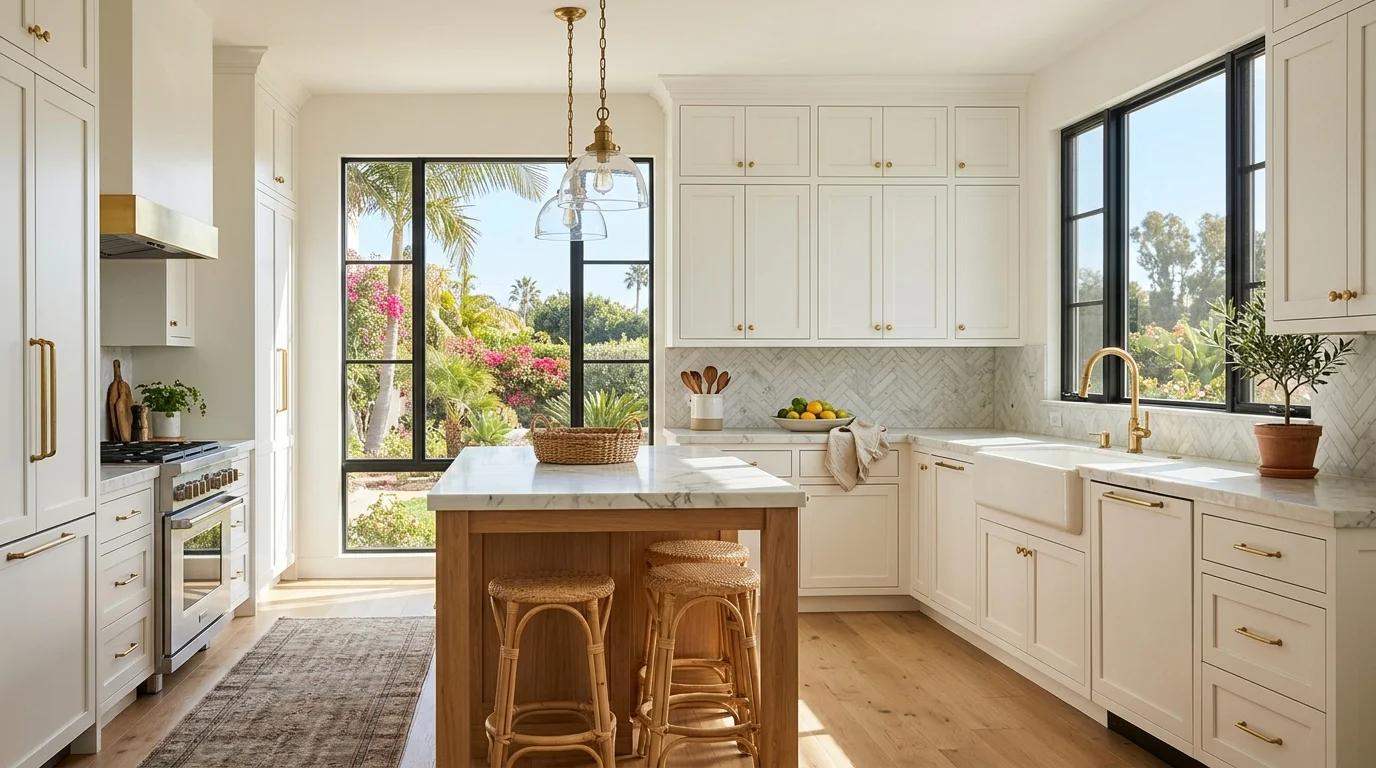
Shaker cabinet doors sit between plain slab fronts and ornate raised panels. Their framed face adds depth without dominating the kitchen, which explains their lasting appeal. That same recessed center creates a dust-catching edge that deserves consideration before you order.
What makes a door a shaker door
A shaker door has a flat center panel inside a rectangular frame. The vertical frame pieces are called stiles. The horizontal pieces are rails. Together, they create the clean border most people recognize as shaker styling.
That basic description still leaves plenty of design choices. Frame width changes the door’s visual weight. A wide frame feels substantial and traditional. A narrower frame makes the same construction look lighter. The depth of the center panel also matters. A shallow recess looks restrained, while a deeper profile casts stronger shadows.
Pay close attention to the inside edge of the frame. A square transition produces a crisp, simple face. Beveled or molded edges add decoration and move the door toward transitional styling. Sellers may still use the shaker label, so compare profile drawings instead of relying on the product name.
Door placement changes the result too. Small gaps between doors create a broad, nearly continuous cabinet face. Wider exposed borders make each cabinet opening more noticeable. Neither approach is automatically better. Your choice should follow the room’s scale and the amount of detail you want.
Ask to see a full-size sample before approving an order. Small finish chips don’t show rail width, shadow lines, or corner joints. For unusual openings, appliance panels, or carefully matched proportions, explore custom kitchen cabinets and built-ins. A local remodeler can also explain which available door profile fits the cabinet plan.
“Never out of style” isn’t a guarantee about every shaker door. It describes a flexible frame-and-panel shape. Finish, proportions, hardware, and surrounding materials determine whether the finished kitchen feels quiet, traditional, or current.
The dust ledge nobody mentions
The recessed panel creates four inside edges. The lower horizontal edge is the one homeowners notice during cleaning. Dust can settle there, while drips and cooking residue can collect near frequently used doors.
This doesn’t make shaker doors difficult to own. It does mean they need a more deliberate wipe than slab doors. A slab front offers one broad, flat surface. A raised-panel door introduces additional curves, corners, or grooves. Shaker falls between those two designs.
Run a soft cloth along the lower recess during routine cleaning. Wipe the face afterward so loosened material doesn’t settle elsewhere. Follow the cabinet maker’s care instructions for the chosen finish. Don’t assume one cleaner is suitable for every paint, stain, or topcoat.
Look closely at handle placement as well. Knobs and pulls give hands a consistent contact point. Doors without visible hardware are touched along an edge instead. That can change where fingerprints and cooking residue appear, especially near a sink, range, or trash pullout.
Profile shape affects cleaning more than the shaker name alone. A sharp interior corner can require a careful pass with the cloth. A slightly softened transition may feel easier to reach. Inspect a sample with your hand, not just your eyes.
Homeowners who strongly dislike grooves may prefer slab fronts. Those who want more depth may accept the extra wipe. The honest tradeoff is simple: shaker doors add shadow and structure because the face isn’t completely flat.
Shaker in paint versus stain
Paint turns the rails, stiles, and center panel into one color field. The recessed profile remains visible through light and shadow. This treatment works when you want cabinet shape without prominent wood grain.
White isn’t the only option. Warm neutrals can soften the contrast between cabinets and stone. Deep blue, muted green, and charcoal can give an island or lower cabinets more visual weight. The right choice depends on nearby flooring, counters, backsplash, and natural light.
Test a complete sample inside your kitchen. Review it in morning light, afternoon light, and after the room’s fixtures are on. A showroom sample can shift beside your actual wall color and countertop. Place the sample vertically because cabinet doors won’t be viewed flat on a table.
Stain keeps more of the wood’s visible character. Grain direction then becomes part of the design. Compare several sample doors because the finished appearance can vary across pieces. Also ask how panels, rails, and stiles will relate visually. The front should feel intentional once every door and drawer is installed together.
Don’t infer construction from the finish. Ask the seller to identify the materials used for the frame, center panel, and exposed ends. Get the finish name and care directions in writing. Those details make later touch-up conversations much clearer.
Paint can make the shaker geometry feel graphic. Stain can make it warmer and more textured. Mixed finishes are another option, such as painted perimeter cabinets with a stained island. Keep the door profile consistent if the room already includes several strong materials.
Cost against slab and raised panel
No verified San Diego County source provides a reliable price difference among shaker, slab, and raised-panel doors. A responsible comparison therefore starts with written quotes for the same cabinet plan. The cabinet supplier or independent remodeler sets the actual price.
Don’t compare a stock slab door with a custom shaker door and blame the difference on style. Match the door material, cabinet box, finish, overlay, hardware, interior fittings, and installation scope. Otherwise, several variables are changing at once.
Slab doors have a flat face, but that description doesn’t establish their price. Shaker doors add a framed appearance, yet product construction varies. Raised-panel doors add another level of surface detail. Brand, material, finish, sizing, and fabrication choices can move any option above another.
Ask each bidder to separate the cabinet boxes, doors, drawer fronts, finish, hardware, delivery, and installation. Request alternate pricing for each door style on the same layout. That structure shows where the quote changes without relying on an unsupported market average.
The project scope matters just as much as the door. New cabinets replace boxes and fronts. Refacing generally focuses on the visible cabinet surfaces while keeping suitable existing boxes. Read the comparison of custom cabinets versus stock cabinets before comparing proposals with different construction levels.
If the layout works and the boxes are candidates for reuse, kitchen cabinet refacing may deserve a separate conversation. A local pro needs to inspect their condition and measurements before recommending that path. Modern Kitchen SD doesn’t set cabinet prices, sell doors, or issue project quotes. We connect San Diego County homeowners with licensed, independent kitchen remodel professionals.
Making shaker feel current
Start with proportion. Narrower rails can give shaker doors a lighter appearance. Wider rails make the frame more prominent. Choose one profile for the full kitchen, then use color or hardware for variation. Too many door profiles can make a compact room feel unsettled.
Hardware provides the clearest finishing choice. Long pulls create strong lines across drawers. Smaller knobs keep the cabinet face quieter. Dark hardware adds contrast against pale paint. Brass-toned hardware brings warmth, while finishes closer to the cabinet color draw less attention.
Placement matters as much as finish. Align pulls consistently across neighboring drawers. Check that handles won’t collide at inside corners. Test how they feel from normal standing positions. A paper template can help you study the layout before holes are drilled, but final measurements should follow the selected hardware and door plan.
Keep nearby surfaces restrained when the cabinets already carry strong color. A quieter backsplash lets the door rhythm remain visible. If the counters and tile have active patterns, a soft cabinet color can hold the composition together. Repeating one metal finish can also connect cabinet hardware with lighting or plumbing fixtures.
You don’t need to chase a dramatic trend. A current shaker kitchen often comes from editing. Limit decorative edges, compare full-size samples, and coordinate the door with the room’s fixed materials. The result should make sense in your home, not only in a product photograph.
If the cabinet decision becomes part of a larger remodel, building permits may be required depending on the scope. Homeowners within the City of San Diego can consult Development Services about their specific project. Don’t treat a door selection as proof that every related change follows the same process.
When to call us
Call a licensed kitchen remodeling pro when the project involves new cabinets, refacing, box repairs, or coordinated layout changes. Before hiring, confirm the professional’s status through the CSLB License Check. Call us at (858) 400-4623 and we’ll connect you with a licensed local kitchen remodeler.