Shopping for kitchen cabinets in San Diego starts with one choice: who will own the measurements, order, and installation. A showroom, home center, online seller, or local cabinet shop may quote a different scope. Compare the whole package, not a door style or box price alone.
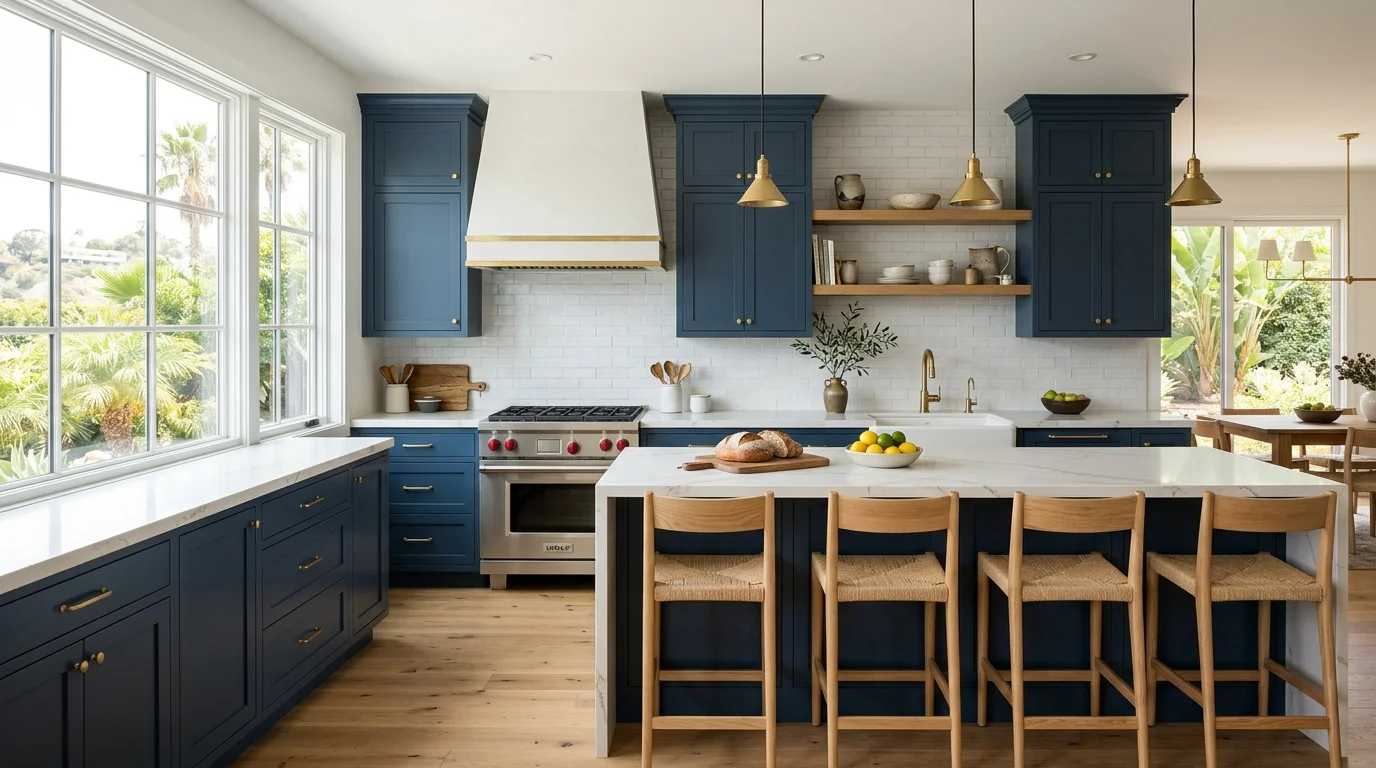
Where San Diego kitchens get their cabinets
Cabinet buyers generally follow one of four paths. They visit a home center, work with a cabinet showroom, order online, or hire a local cabinet shop. Each path can work, but the responsibilities may differ.
Start by deciding whether you need cabinet boxes, design help, delivery, installation, or all four. A low cabinet quote may exclude field measurements or installation. A larger proposal may include those tasks. Put the scopes side by side before comparing totals.
Modern Kitchen SD serves communities across San Diego County. That broad area includes coastal North County, inland North County, central San Diego, East County, and the South Bay. Give each seller your exact delivery city and ZIP code. “San Diego area” isn’t precise enough for a useful delivery proposal.
Site access matters too. Tell the seller about gates, stairs, elevators, parking limits, narrow entries, and delivery restrictions. Ask where the cabinets will be placed after unloading. The answer should appear in the written scope.
Your project type may narrow the source list. Homeowners seeking fitted storage or unusual dimensions can explore custom kitchen cabinets and built-ins. If the cabinet boxes will remain, kitchen cabinet refacing may be another route. Refacing and full cabinet replacement shouldn’t be compared as identical projects.
Before visiting a showroom, bring room photos and appliance information. Also bring a short list of priorities. Storage, finish, layout, maintenance, and installation responsibility matter more than collecting dozens of door samples.
Stock, semi custom and local shops
Stock, semi-custom, and custom are common cabinet labels. They aren’t enough to compare two orders. Sellers may define their product lines differently, so ask what each label means in that proposal.
A stock order usually starts with a fixed catalog. Confirm the available cabinet sizes, door styles, finishes, interior options, and trim pieces. Don’t assume a displayed finish is available for every cabinet in your plan.
Semi-custom lines may offer more combinations. Ask which dimensions can change and which remain fixed. Confirm whether finish panels, fillers, end panels, moldings, and interior accessories come from the same product line. Those details affect the finished appearance.
A local custom shop may build around a project-specific plan. “Custom” still needs a written definition. Ask whether the quoted work includes design drawings, field verification, fabrication, finishing, delivery, installation, and final adjustments. Also confirm who approves the drawings before production begins.
Compare construction details using the seller’s actual sample and specifications. Look at the door, drawer, cabinet interior, exposed ends, hinges, and finish. Open the display cabinets. Ask which displayed parts match your written quote.
Finish samples deserve special attention in San Diego’s strong natural light. View samples in your kitchen when possible. Check them during the morning and afternoon. A showroom display can’t reproduce the light inside your room.
For a deeper comparison of order types, read our guide to custom kitchen cabinets versus stock cabinets. The useful choice isn’t the category with the strongest label. It’s the source that documents your dimensions, selections, responsibilities, and installation scope clearly.
Lead times and what delays them
We couldn’t confirm one reliable lead-time figure for kitchen cabinets across San Diego. Manufacturers, sellers, local shops, and installers set their own schedules. Ask for a current project-specific timeline before signing or paying.
A useful timeline separates design, approval, ordering, production, delivery, and installation. Request a date or written range for each stage. Also ask what must happen before the schedule begins. The clock may depend on approved drawings, final finishes, appliance specifications, or another listed decision.
Find out whether the cabinets are currently available, scheduled for production, or waiting on another item. Ask how the seller handles unavailable pieces. A missing panel or specialty cabinet can affect more than one part of the layout.
Delivery isn’t the final milestone. Confirm when the installer will inspect the order and report damage, missing pieces, or incorrect items. Ask who files a replacement request and who updates the installation schedule. Those responsibilities shouldn’t remain verbal.
Don’t schedule demolition solely around an early sales estimate. Ask the installer what must be present before existing cabinets come out. Countertop templates, plumbing work, electrical work, flooring, and appliance placement may follow separate schedules. Your written plan should show how those scopes connect without promising an unverified completion date.
Delivery planning also changes by property. From the South Bay to coastal North County, the exact address matters more than a broad regional label. Share building access rules and storage limits before the order ships.
Finally, ask what can change the quoted timeline. The seller should identify approval delays, selection changes, backordered items, freight damage, site-access problems, and replacement orders if they apply. You’re looking for a transparent process, not an optimistic verbal promise.
Measuring and the reorder trap
Cabinet orders depend on exact room and product information. Decide in writing who measures, who checks the plan, and who carries responsibility for ordering dimensions. A seller’s rough layout isn’t automatically a field-verified installation plan.
The measurement record should cover every wall involved in the layout. It should also identify ceiling heights, doors, windows, soffits, trim, corners, and visible obstructions. Measure walls at multiple points instead of relying on one reading.
Appliance information belongs in the plan before cabinet approval. Use the specifications for the exact refrigerator, range, hood, dishwasher, microwave, sink, and other fitted items. A general appliance category doesn’t provide enough ordering detail.
Mark existing plumbing, electrical, and ventilation locations for the designer. If the layout changes those locations, ask the remodeler to identify the related work separately. Don’t treat cabinet installation as the entire kitchen scope.
Review fillers, finished ends, toe kicks, moldings, panels, and hardware. Small pieces can determine whether doors open properly and exposed cabinet sides look complete. Ask where every non-cabinet component appears on the drawing and quote.
Before approval, compare the plan with the room in person. Check cabinet numbers, door swings, drawer locations, appliance openings, and corner conditions. Make sure the final drawing carries an approval date or version number. Save a copy with the signed order.
Building permits may be required depending on the project scope. We couldn’t confirm a kitchen-specific permit trigger from the City of San Diego’s online material. For a property within the city, check your planned work with San Diego Development Services. For another location, confirm the current requirements with the authority responsible for that address.
A reorder can interrupt connected work. Careful field verification won’t promise a perfect project, but it gives the seller and installer one shared plan to check.
Getting an install quote that holds
We couldn’t confirm a reliable average cabinet price for San Diego. Cabinet sellers and independent installers set their own quotes. Compare written scopes instead of relying on an unsourced market average.
Ask each bidder to identify the exact cabinet line, door style, finish, box construction, interior options, and hardware. The quote should match the approved plan and cabinet list. If an item is an allowance or pending selection, label it clearly.
Installation deserves its own scope. Confirm whether it includes delivery handling, cabinet placement, wall attachment, leveling, fillers, panels, trim, hardware, adjustments, and jobsite cleanup. Ask whether removal of existing cabinets and debris is included or separate.
Also identify every excluded trade. Countertops, backsplash, flooring, plumbing, electrical work, painting, and appliance connections shouldn’t disappear inside the phrase “cabinet installation.” Link each included task to the professional responsible for it.
Request the payment schedule, quote expiration date, change process, and cancellation terms in writing. Ask how additions or substitutions receive approval. If the seller finds a measurement conflict, the contract should identify who reviews the correction and authorizes a revised order.
The installer’s identity matters. Modern Kitchen SD is a referral service, not a contractor. We match homeowners with licensed, independent local kitchen remodel professionals. The homeowner contracts with and pays the selected professional directly.
Before signing, check the contractor through the CSLB License Check tool. Search the exact business or license information provided in the proposal. License verification confirms legal status, not workmanship, so continue reviewing the written scope carefully.
A dependable comparison fits on one page: cabinet order, design responsibility, field measurement, delivery, installation, exclusions, and change handling. When those categories match, the quotes become much easier to evaluate.
When to call us
Call when cabinet replacement involves field measurements, installation, fitted storage, or coordination with other kitchen work. Those scopes need a licensed Kitchen Remodeling professional who can review the property and provide a project-specific proposal.
Call us at (858) 400-4623 and we’ll connect you with a licensed local kitchen remodeler.