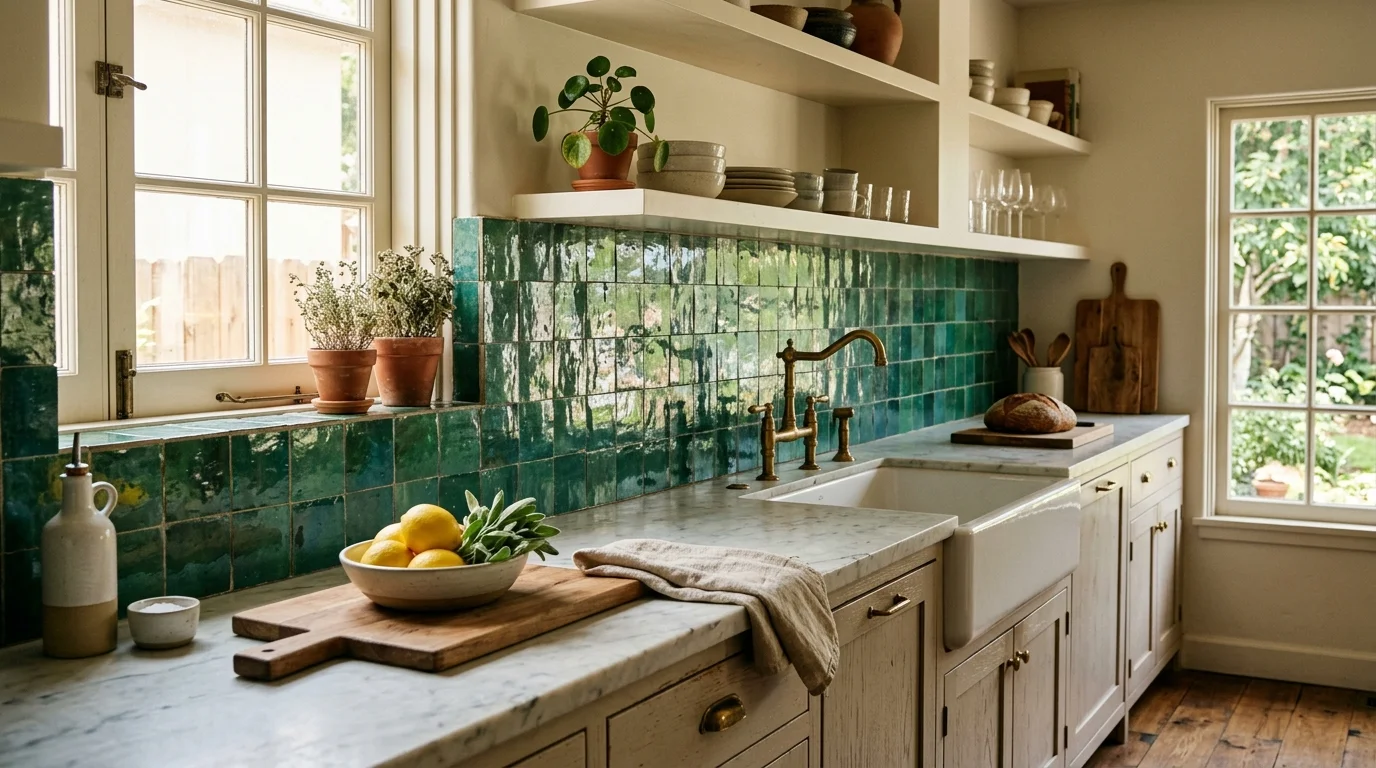
A zellige tile backsplash can make a kitchen feel layered and personal. It can also disappoint someone expecting straight edges, uniform color, and a perfectly flat surface. The decision comes down to whether you’ll enjoy that variation every day.
What makes zellige different
Zellige stands apart because each installed piece can read differently. Color, reflection, edge shape, and surface texture may shift across one wall. Those changes create the lively appearance people seek when choosing this tile.
That character is easier to understand in person. A small online image can flatten the color and hide irregular edges. Before ordering, ask the supplier for current samples from the material being considered. View several pieces together, not one carefully selected tile.
Set the samples against the actual countertop and cabinet finish. Then check them during morning, afternoon, and evening light. Coastal daylight in Encinitas may reveal the surface differently than strong inland light in Poway. Under-cabinet lighting can change the view again.
The product name alone doesn’t tell you how dramatic the finished wall will look. Ask the supplier how the tile is produced, sorted, and packaged. Request written installation and care instructions for that exact product. Those documents matter more than general advice attached to the word “zellige.”
Also inspect the available trim and edge options. A backsplash often ends beside a window, cabinet, doorway, or open wall. The stopping point needs a deliberate finish. Otherwise, an expressive field of tile can meet an edge that looks unresolved.
If you’re still comparing materials, our kitchen backsplash tile service can connect you with a licensed independent local pro. The homeowner hires and pays that professional directly.
The variation is the point
A good zellige layout usually doesn’t hide variation. It distributes it across the wall so one patch doesn’t dominate the room. That requires seeing more than the top tile in each package before installation begins.
Open several packages and place loose pieces near one another. Look for shifts in tone, shine, surface, and edge shape. If one group reads much lighter or darker, decide whether to blend it throughout the field. Don’t wait until those pieces are fixed to the wall.
This planning matters around visual anchors. The area behind a range often becomes the room’s focal point. Tile surrounding a window or open shelf also catches attention. A concentrated color shift in one of those locations may look intentional, or it may feel accidental. The layout should settle that question before installation.
Grout color changes the overall effect. A closer color can make the wall read as one textured surface. More contrast can outline individual pieces and emphasize irregular edges. Test the tile and grout together on a sample board. Don’t approve grout from a digital image or a small color strip alone.
Consider the surrounding materials too. Quiet cabinets and simple counters can give varied tile room to lead. A kitchen with active stone, detailed doors, and several metal finishes already has competing visual movement. In that setting, a restrained tile selection may hold the room together better.
Our guide to kitchen backsplash tile trends offers more comparisons. Trends can narrow the choices, but your samples should make the final case.
Installation labor and waste factor
An irregular tile installation asks for judgment throughout the layout. The installer must decide how pieces relate, where cuts land, and how exposed edges finish. Those choices affect the final appearance as much as the tile selection.
Start with a measured layout of the actual wall. Outlets, corners, windows, cabinets, and appliance clearances can interrupt the pattern. A dry layout helps expose narrow cuts or awkward stopping points before material reaches the wall.
Ask the installer how the field will be centered and blended. Discuss the backsplash height, corner treatment, and termination points. Confirm how the tile will meet the countertop and upper cabinets. If the wall isn’t flat, the professional should assess it before setting begins.
There isn’t one confirmed waste factor that applies to every zellige project. Don’t accept a guessed percentage as though it applies everywhere. The needed quantity depends on the product, layout, wall dimensions, edge conditions, and usable pieces. Have the supplier and installer calculate it from your measured space.
Ordering decisions should also account for later repairs. Ask whether additional matching material is available and whether future batches may look different. Get the answer from the supplier for the exact product. Keep any approved spare pieces labeled after the project.
Installation quotes can’t be reduced to one reliable San Diego figure here. Pattern, wall preparation, cuts, material, and project scope can change the work involved. Compare written proposals that describe the same scope.
California homeowners can verify a contractor through the CSLB License Check. License status confirms legal standing, not design judgment or workmanship quality. Review the proposed layout and relevant experience separately.
Cleaning an uneven surface
A zellige backsplash should fit the way you actually cook. Gloss, texture, grout, and irregular edges can affect how the wall feels during routine cleanup. A sample board gives you a better test than a showroom display.
Ask the supplier for the current care instructions before choosing a cleaner. Follow the written guidance for that exact tile and grout combination. Don’t assume advice for another glazed tile applies here. Product composition and finish can differ.
Use the sample board to test normal kitchen residue and your preferred cleaning method. Check whether a cloth catches along the edges. Notice whether residue remains in lower spots or around grout joints. Let the board dry fully, then inspect it from the angles you’ll see every day.
Placement matters. Tile behind the main cooking area faces different use than tile along a beverage counter. A highly textured surface may feel charming on a quiet wall but demanding near frequent splashes. That doesn’t make it a poor material. It makes placement part of the selection.
Grout deserves equal attention. Ask the installer and product manufacturer which grout is compatible with the selected tile. Request written guidance covering cleaning, sealing, and ongoing care. If advice conflicts, pause until the product supplier and installer agree on the method.
San Diego’s bright natural light can reveal streaks and residue across glossy surfaces. View the cleaned sample beside a window and beneath planned task lighting. That simple check shows more than a polished display photographed under controlled light.
Choose the surface only after accepting its everyday texture. A backsplash shouldn’t require you to admire it from one angle while resenting it during cleanup.
Rooms where zellige earns its cost
Zellige earns consideration where its variation has space to register. A long, visible wall can turn changing reflections into a major design feature. A smaller installation can work too, especially when it gives one focused area more depth.
It often makes sense when the rest of the kitchen stays visually calm. Flat stretches of cabinetry, restrained countertops, and simple hardware leave room for an irregular backsplash. The tile can become the detail that keeps the room from feeling overly controlled.
Natural light also helps the surface show its range. Kitchens with windows facing the backsplash can look different across the day. Under-cabinet lighting adds another layer after sunset. Test both conditions before committing to the entire wall.
Zellige may be less convincing when the desired result is strict uniformity. If straight visual lines and repeatable color matter most, compare it with more consistent alternatives. The subway tile backsplash guide provides another useful starting point.
The material also deserves scrutiny in busy visual settings. Strong countertop movement, patterned flooring, detailed cabinet doors, and open shelving can compete with varied tile. Build a material board with every finish represented. Remove anything that doesn’t support the main idea.
There isn’t one confirmed typical price for a San Diego zellige backsplash. Material and labor figures should come from current written quotes. Compare the tile quantity, wall preparation, trim, grout, layout, and cleanup scope.
During a full kitchen remodel, decide on backsplash material before surrounding details become fixed. Early coordination lets the remodeler consider countertop lines, cabinet endpoints, lighting, and visible edges together.
When to call us
Call when the backsplash includes difficult edges, wall preparation, electrical openings, or coordination with a larger kitchen project. Modern Kitchen SD is a referral service, and the independent professional handles the physical work.
Call us at (858) 400-4623 and we’ll connect you with a licensed local kitchen remodeler.