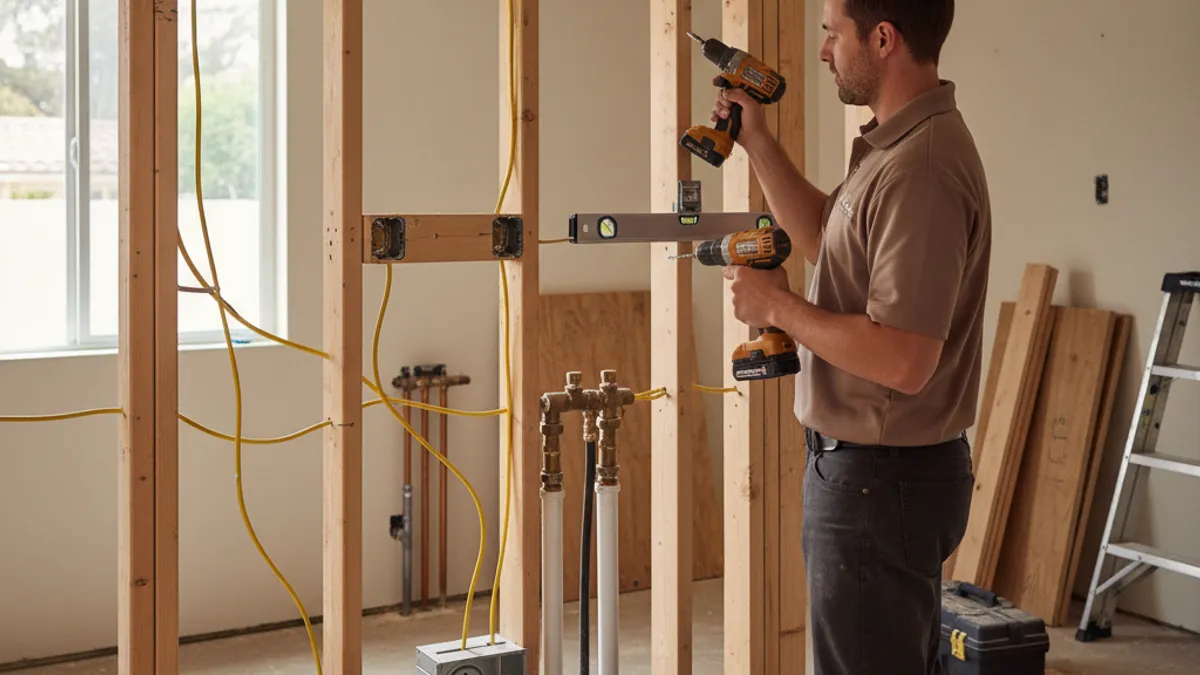
A kitchen plumbing remodel touches more of the project than most homeowners expect going in. Moving the sink six feet for a new island, adding a second dishwasher line for a butler’s pantry, or running gas to a new range all sound like small changes on paper. Underneath the wall, each one means new supply lines, a new drain path, and often a new vent run tied into the stack. Get the plumbing scope wrong at the estimate stage and it shows up later as a change order, a failed rough inspection, or both.
This is a plain-language look at what actually moves during a kitchen plumbing remodel, what drives the cost up or down, and the older-home quirks that catch San Diego remodels off guard. For the permit side, see our guide to kitchen remodel permits in San Diego; this one stays with the physical work itself.
What a kitchen plumbing remodel actually moves
A sink relocation is the most common plumbing change in a kitchen remodel, usually driven by a new island or a layout that finally makes sense after years of working around a bad one. The supply lines (hot and cold) are the easy part. Copper or PEX runs a new path with a few fittings, and a licensed plumber handles that in an afternoon.
The drain is the harder half. Every fixture needs a trap and a vent, and the vent has to tie into the home’s vent stack within a code-set distance of the trap, called the trap-to-vent distance. Move the sink too far from the existing stack and the plumber has to run a new vent through the roof, or install an air admittance valve where the local jurisdiction allows one. That single decision, more than the pipe run itself, is usually what separates a $1,200 sink move from a $4,000 one.
What drives the cost of a sink relocation:
- Distance from the existing drain stack (short moves stay cheap, moves across the kitchen add vent work)
- Whether the vent ties into an existing stack or needs a new roof penetration
- Slab-on-grade versus a raised foundation (cutting concrete adds cost and its own inspection)
- Whether the supply lines are copper, galvanized, or PEX, since older galvanized runs often need full replacement anyway once opened up
Adding a dishwasher, disposal, or second sink
Adding a fixture that wasn’t there before is a different job than moving one that already existed. A new dishwasher needs a hot supply line, a drain connection tied into the sink’s drain or the disposal, and an air gap or high-loop to keep dirty water from siphoning back in. California plumbing code requires backflow protection on a dishwasher drain connection, and an air gap fitting mounted on the counter or sink deck is the most common way San Diego plumbers satisfy it.
A garbage disposal adds its own drain connection under the sink and, if it’s new, an electrical connection too, which is why disposal installs often show up as a joint plumbing-and-electrical line item. A second sink, common in larger islands or butler’s pantries, needs its own trap and vent, which is why a “just add a small prep sink” request is rarely as small as it sounds once the vent run gets mapped.
Running gas to a new range or cooktop
A gas line change is its own category of work, and one a licensed plumber or specialty gas fitter handles, not a general contractor. Upgrading from a 30-inch range to a 36-inch professional-style range almost always means upsizing the gas line, since the higher-BTU burners on a bigger range draw more gas than the existing line was sized for. Adding a pot filler or a second gas appliance on the same line has the same effect.
SDG&E has to be notified for the turn-off before the work starts and the turn-on and pressure test after it’s done, and that step adds a day or two to the schedule that homeowners sometimes don’t plan for. For the permit and fee side of gas work, our kitchen remodel permits guide has the specifics, and our kitchen electrical code guide covers the wiring changes that often happen alongside a gas line move.
Why older San Diego homes complicate plumbing scope
San Diego’s housing stock spans 1920s Craftsman bungalows in North Park to 1970s ranch homes in Clairemont and El Cajon, and the plumbing behind the kitchen wall tells you which era you’re in.
Homes built before the 1960s often still have galvanized steel supply lines, which corrode from the inside over decades and restrict water flow long before they fail outright. Once a wall is opened for a remodel, most plumbers recommend replacing the galvanized run to the kitchen rather than tying new fixtures into pipe that’s already past its useful life. It’s an added cost nobody budgeted for, but cheaper to handle while the wall is already open than to fix a burst pipe two years later.
Homes built through the 1970s and into the 1980s sometimes have cast iron drain lines, which hold up well but cost more to modify than modern PVC or ABS. Cutting into a cast iron drain to add a new branch takes more labor and, in some cases, a fitting a standard plumber’s truck stock doesn’t always carry.
Coastal homes in areas like Point Loma, Ocean Beach, and Del Mar see faster corrosion on exposed metal fittings because of the salt air, which is one more reason a plumber inspects the existing lines before quoting a straightforward-sounding relocation. Inland cities like La Mesa and El Cajon skip the salt-air problem but still see plenty of original galvanized supply lines in homes from the 1950s and 60s. A kitchen remodel is usually the only time these systems get a real look, so it’s worth having the plumber flag anything that’s aging out even if it’s outside the immediate scope.
What a rough plumbing inspection actually checks
Every plumbing change in a San Diego kitchen remodel gets inspected twice: once at rough-in, before the wall closes, and once at final, after the fixtures are set. The rough inspection is the one that catches problems while they’re still cheap to fix.
An inspector at rough-in checks the trap-to-vent distance on every fixture, the slope of the drain line (a standard quarter-inch per foot, checked with a level), the pressure test on the supply lines, and the backflow protection on the dishwasher connection. A line that fails slope or vent distance gets rerouted before drywall goes up, inconvenient but far cheaper than finding the same problem after the kitchen is finished.
What to ask before the plumbing scope is locked
A few questions catch plumbing surprises before they become change orders:
- Are the existing supply and drain lines being reused, or are we opening the wall to confirm what’s actually back there?
- If the sink or island moves, does the vent tie into the existing stack, or does this need a new roof penetration?
- Is the gas line sized for the new appliance, or does it need to be upsized?
- Who is scheduling the SDG&E turn-off and turn-on if gas work is involved?
A crew that answers these plainly before the demo starts won’t hand you a surprise invoice at rough-in. Our full kitchen remodel page covers how plumbing fits into the full project scope, and the kitchen island design guide walks through the layout decisions that usually drive a sink relocation in the first place.
Call (858) 400-4623 and we’ll match you with an insured local crew that scopes the plumbing before the demo starts, not after.
Frequently asked questions
How much does it cost to move a kitchen sink?
A short move that stays close to the existing drain stack typically runs $1,200-$2,500 in San Diego. A move that requires a new vent run or a roof penetration usually pushes into the $3,000-$5,000 range, and cutting into a slab foundation adds more on top of that. The trap-to-vent distance, not the distance the sink physically travels, is what really sets the price.
Do I need a permit to move a kitchen sink?
Yes. Any change to the kitchen’s plumbing system, including moving a sink, requires a plumbing permit in San Diego and every surrounding city. The permit covers a rough inspection before the wall is closed and a final inspection once the fixtures are set. See our kitchen remodel permits guide for the fee ranges.
Can I add a dishwasher where there wasn’t one before?
Yes, in most kitchens. It needs a new hot water supply line, a drain connection with backflow protection, and usually a dedicated electrical circuit. The work is straightforward if the sink or disposal it ties into is nearby; it gets more involved if the new location is far from the existing drain.
Does a bigger gas range always need a bigger gas line?
Not always, but often. A jump from a 30-inch to a 36-inch professional-style range, or adding a second gas appliance like a pot filler, commonly exceeds what the existing line was sized to carry. A licensed plumber or gas fitter calculates the BTU load and confirms whether the existing line holds up before the new range is installed.
What happens if a plumber finds galvanized pipe behind the wall?
Most plumbers recommend replacing it rather than tying new work into it, since galvanized steel corrodes from the inside and restricts flow well before it visibly fails. It’s an added line item, but far cheaper to handle now than as an emergency repair after the remodel is finished.
Why does moving a sink sometimes require cutting into the roof?
Every drain needs a vent to work correctly, and the vent has to connect to the home’s vent stack within a set distance of the trap. If the new sink is too far from the existing stack, the plumber has to run a new vent, which usually means a new roof penetration. It’s the single biggest cost driver in a sink relocation.