For a 2026 San Diego remodel, choose induction only after checking the exact appliance, your cookware, the electrical scope, and ventilation. Choose gas when you prefer the tested model and a licensed professional confirms it suits the property. The right answer depends on the appliance and kitchen, not a universal winner.
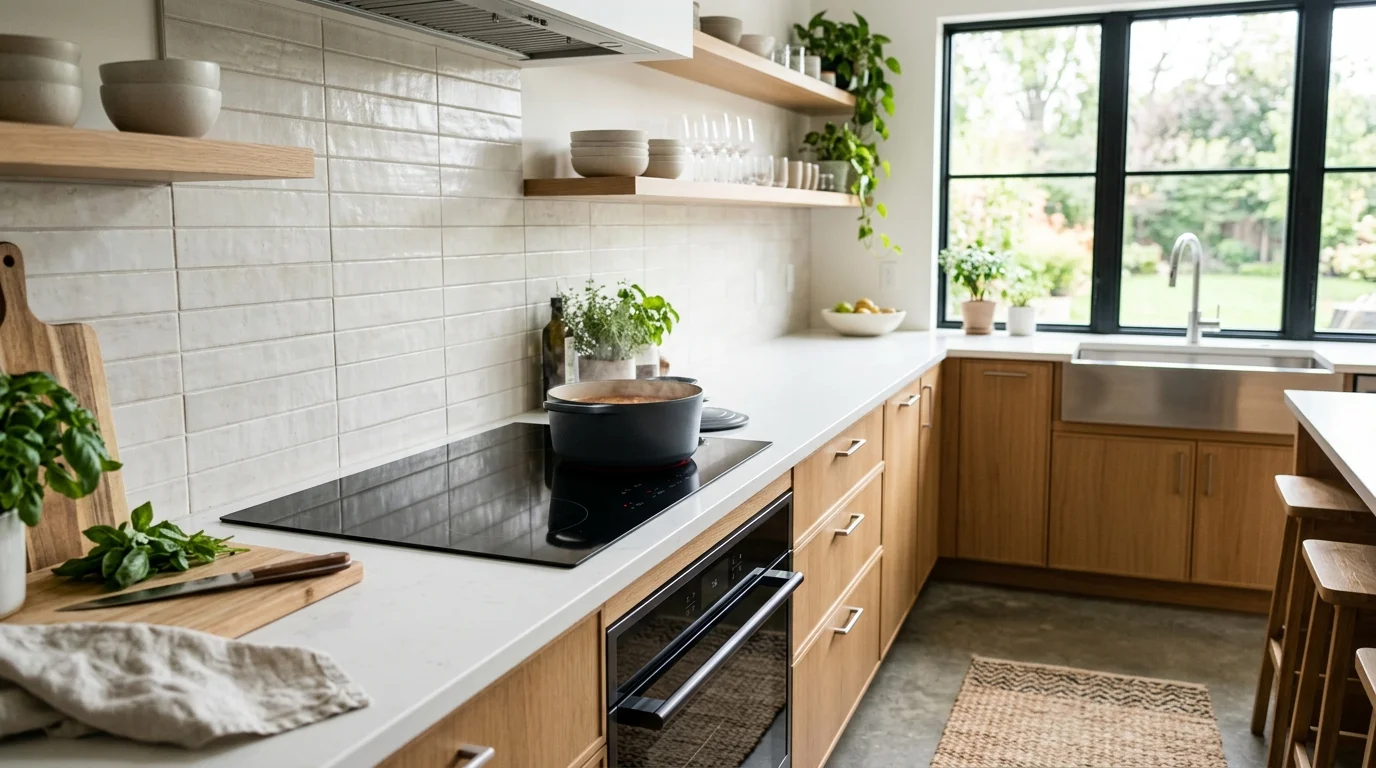
How induction actually cooks
A reliable explanation of induction must come from the chosen appliance manufacturer. The technical mechanism couldn’t be confirmed for every model. Check the model’s documentation for details that apply to the appliance you’re considering.
Start with the installation and use manuals for each model. Find the manufacturer’s description of its heating method, controls, compatible cookware, power requirements, and ventilation instructions. If those details aren’t clear, request written confirmation from the manufacturer or an authorized retailer.
Then compare the two cooktops in person. Use a cooking task you regularly perform rather than a showroom demonstration chosen by the salesperson. Try the controls, change the setting several times, and note whether the response feels natural. Look at how clearly the surface communicates its current setting and operating status.
This process matters because “induction” and “gas” are broad shopping categories. Neither label tells you whether a particular control layout will suit your hands, pans, or cooking habits. The model number is what connects the purchase decision to real documentation.
San Diego kitchens also vary by property. A downtown condo and a detached El Cajon home may present different installation questions. The same applies across coastal North County, central San Diego, East County, and the South Bay. Have the selected appliance reviewed against the actual address before ordering it.
If the cooktop decision affects cabinets, counters, lighting, or the room layout, treat it as part of a full kitchen remodel. That keeps appliance planning connected to the surrounding work.
Speed, control and cleanup
Speed and control matter, but generic rankings aren’t enough. Universal cooking times or performance differences between induction and gas couldn’t be confirmed. Compare the exact models under consideration instead of relying on a category claim.
Build a short test around your normal routine. You might heat the same quantity in the same compatible pan, lower the setting, and observe the result. Repeat the task on both models when a retailer allows it. Don’t compare one working display with another appliance that isn’t connected or configured for use.
Pay attention to the control interface. Some buyers like physical controls. Others prefer a flatter surface and different control arrangement. That preference is personal, so a live test provides more value than a broad statement about which system has “better” control.
Cleanup deserves the same hands-on review. Ask the manufacturer how its surface and controls should be cleaned. Look at seams, knobs, control areas, and any removable components. Check whether the recommended cleaning process fits the way you cook. A material that looks simple in a photograph may still have model-specific care instructions.
Also consider the kitchen around the appliance. A cooktop near a busy island may need a different control location than one along a perimeter counter. Families with several cooks should test whether each person can read and operate the interface comfortably.
Write down your findings before comparing finishes or promotional features. Cooking response, control comfort, and cleaning instructions affect daily use. Decorative details shouldn’t hide a poor fit in those three areas.
Cookware you may need to replace
Don’t replace cookware based on a generic induction rule. A universal compatibility formula couldn’t be confirmed. The selected cooktop manufacturer should confirm which cookware works with that appliance.
Create an inventory before visiting a showroom. Include the brand, material, size, and condition of the pots and pans you use most. Take several important pieces with you if the retailer permits testing. Ask for written compatibility guidance tied to the exact cooktop model.
Don’t rely only on an informal test or a salesperson’s memory. Product markings, model documentation, and written manufacturer guidance offer a clearer record. If the manual uses a compatibility symbol or specific wording, follow that manufacturer’s instructions.
Replacement decisions should reflect how you actually cook. A rarely used pan shouldn’t carry the same weight as the pot you use most nights. Separate your cookware into three groups: confirmed compatible, confirmed incompatible, and not yet confirmed. Keep uncertain items in the third group until the manufacturer answers.
Include specialty pieces in the review. Griddles, oversized pans, roasting vessels, and family cookware may influence the final choice. Confirm that their dimensions and construction meet the selected model’s written guidance.
This check can prevent a late surprise during a remodel. It also makes the showroom comparison fairer. Testing one system with familiar cookware and another with unfamiliar cookware won’t tell you which setup feels better at home.
Electrical service and the 240 volt circuit
Don’t assume every induction cooktop has the same 240-volt requirement. A universal voltage, amperage, circuit, or service requirement for induction appliances couldn’t be confirmed. Use the installation manual for the exact model and have a qualified professional compare it with the property.
Current California Electrical Code details for kitchen circuit amperage, dedicated circuits, GFCI protection, and AFCI protection couldn’t be confirmed. Ask the licensed contractor and the permitting authority for your address which requirements apply. Our California kitchen electrical code guide can help organize your questions, but the current appliance documentation and project authority must govern the work.
Ask the professional reviewing the kitchen to record:
- The selected model and its stated electrical requirements
- The conditions found at the property
- The proposed equipment location
- The route available for any required electrical work
- Whether nearby cabinets, counters, walls, or finishes are affected
- Which approvals may apply to the planned scope
Building permits may be required depending on the work. For projects within the City of San Diego, check the current process with San Diego Development Services. For homes elsewhere in San Diego County, confirm the correct authority for that address.
This review should happen before the appliance order. A product dimension or finish can be changed on a shopping list. Unexpected work behind finished cabinets is harder to coordinate after fabrication begins.
Plan related electrical and lighting decisions together. Our kitchen electrical and lighting service connects homeowners with licensed independent local remodel professionals who can assess the broader project. Modern Kitchen SD is the referral service and performs no physical work.
Before hiring, verify the contractor through the CSLB License Check. License verification confirms legal status, but it doesn’t guarantee work quality.
Ventilation differences
California’s Title 24 Building Energy Efficiency Standards regulate kitchen ventilation. Current requirements for airflow rates, makeup air, duct materials, and exhaust termination couldn’t be confirmed. Check the current standards or ask the project authority which requirements apply.
That means the ventilation comparison should be model-specific. Read the installation instructions for both cooktops and any proposed ventilation appliance. Ask a licensed professional to compare those instructions with the kitchen layout and current standards. The California Energy Commission is the primary place to check current Title 24 information.
Don’t assume that choosing induction settles every ventilation question. Don’t assume an existing gas setup automatically works with a replacement appliance either. The selected cooking product, ventilation product, room layout, and project scope must be reviewed together.
Location matters inside the kitchen. An island installation presents different design questions from a perimeter run. Upper cabinets, ceiling conditions, finished walls, and available routes may affect the plan. Those conditions should be documented at the property, not inferred from listing photographs.
Ask for a written scope that identifies the appliance models and ventilation approach. It should also explain any related cabinet, ceiling, wall, or electrical work. If a requirement couldn’t be confirmed, the document should identify who will confirm it before construction begins.
This is also where a narrow appliance swap can become a wider remodeling decision. Coordinating the cooktop, ventilation, counters, cabinets, and electrical work reduces conflicting plans. The licensed independent professional you hire is responsible for the physical work, project details, and any warranty they provide.
When to call us
Call when your cooktop choice affects electrical planning, ventilation, counters, cabinets, or permitting. Modern Kitchen SD can match you with a licensed independent local professional who will assess the property and complete the agreed work.
Call us at (858) 400-4623 and we’ll connect you with a licensed local kitchen remodeler.