Porcelain and ceramic should not be chosen once for the entire kitchen. Start with the surface. Daltile treats porcelain as a denser ceramic with a water absorption rate of 0.5% or below, and treats ceramic as more porous and often easier to cut. The exact product sheet still has to approve the wall or floor you have in mind.
What porcelain means on a product sheet
Porcelain is a type of ceramic, not a separate mineral. Daltile’s ceramic-versus-porcelain guide says porcelain is made with a finer clay mix and fired hotter, which makes it denser, harder, and less porous. The same guide puts porcelain’s water absorption below 0.5%. Daltile’s porcelain overview repeats a 0.5% water absorption rate and positions that density for kitchens, bathrooms, and other wet areas.
That percentage is a category claim from one manufacturer, not a substitute for the SKU in your cart. Daltile’s tile-selection notes measure water absorption under ASTM testing and report it as the percentage of water the tile takes on. Record the maker, collection, product number, size, finish, and the absorption figure printed for that product. If the sheet does not state it, ask the manufacturer or seller for written documentation. Do not copy a number from another color, size, or collection.
Daltile also flags PTCA-certified porcelain on product listings. Certification is useful when it is printed for the exact tile. It is not a reason to skip the floor, wall, shower-floor, or exterior rating on the same sheet.
Ceramic remains a valid kitchen material when the sheet approves the use. Daltile describes ceramic as slightly more porous and softer, easier to cut, and a common choice for walls, backsplashes, and lighter-traffic floors in dry indoor areas. A backsplash can stay on the ceramic shortlist when the maker approves interior wall use and the samples work with your cabinets, counter, and light.
Surface-by-surface comparison
Use this table as a starting comparison, then fill the last column from the actual documents.
| Question | Porcelain, as Daltile describes the category | Ceramic, as Daltile describes the category | What you still have to verify |
|---|---|---|---|
| Water absorption | 0.5% or below, called nearly impervious | More porous; absorbs more water | The ASTM absorption percentage on this SKU |
| Typical kitchen uses | Kitchen floors, wet zones, high-traffic areas | Walls, backsplashes, lighter-traffic indoor floors | Floor, wall, countertop, shower-floor, or exterior rating |
| Wear | Denser body; Daltile rates abrasion resistance on a 1-5 scale | Same rating system on the product sheet | Abrasion class for this finish, not a sibling color |
| Slip | DCOF is the friction number Daltile publishes for contaminated surfaces | Same DCOF field on the sheet | Wet-area DCOF and any shower-floor limit |
| Cutting and install | Density requires specialized tools and an experienced setter | Easier to cut; often chosen for large wall runs | Written cutting, layout, and waste assumptions |
| Formats | Large-format, mosaics, wood looks, stone looks, pavers | Wide glaze and decorative range | Size, thickness, rectified edge, grout-joint minimum |
| Outdoor or freeze | Daltile markets porcelain for outdoor use when the sheet allows it | Better suited to dry indoor walls in Daltile’s comparison | Frost resistance and exterior rating, if the space is exposed |
The useful question is not “which category absorbs less.” It is “is this exact tile documented for this exact kitchen surface.” A porcelain collection can include wall-only pieces. A ceramic collection can include a floor-rated body. The label on the box does not override the application icons.
For a backsplash, confirm interior wall use for the selected finish. Ask whether the grout plan suits the area behind the sink and the cooking surface. View several pieces beside the counter, cabinet, and lighting you plan to keep. Our kitchen backsplash service can connect you with a licensed independent remodeler who can review the wall, layout, and installation plan.
For a floor, stay inside products the manufacturer rates for floors. Daltile separates floor use from shower-floor use and outdoor-floor use. Give the installer the sheet and access to the room. Ask for a written plan covering the existing surface, preparation, layout, transitions, movement joints, and finish details. If a concern cannot be resolved from the paperwork, contact the tile maker before ordering.
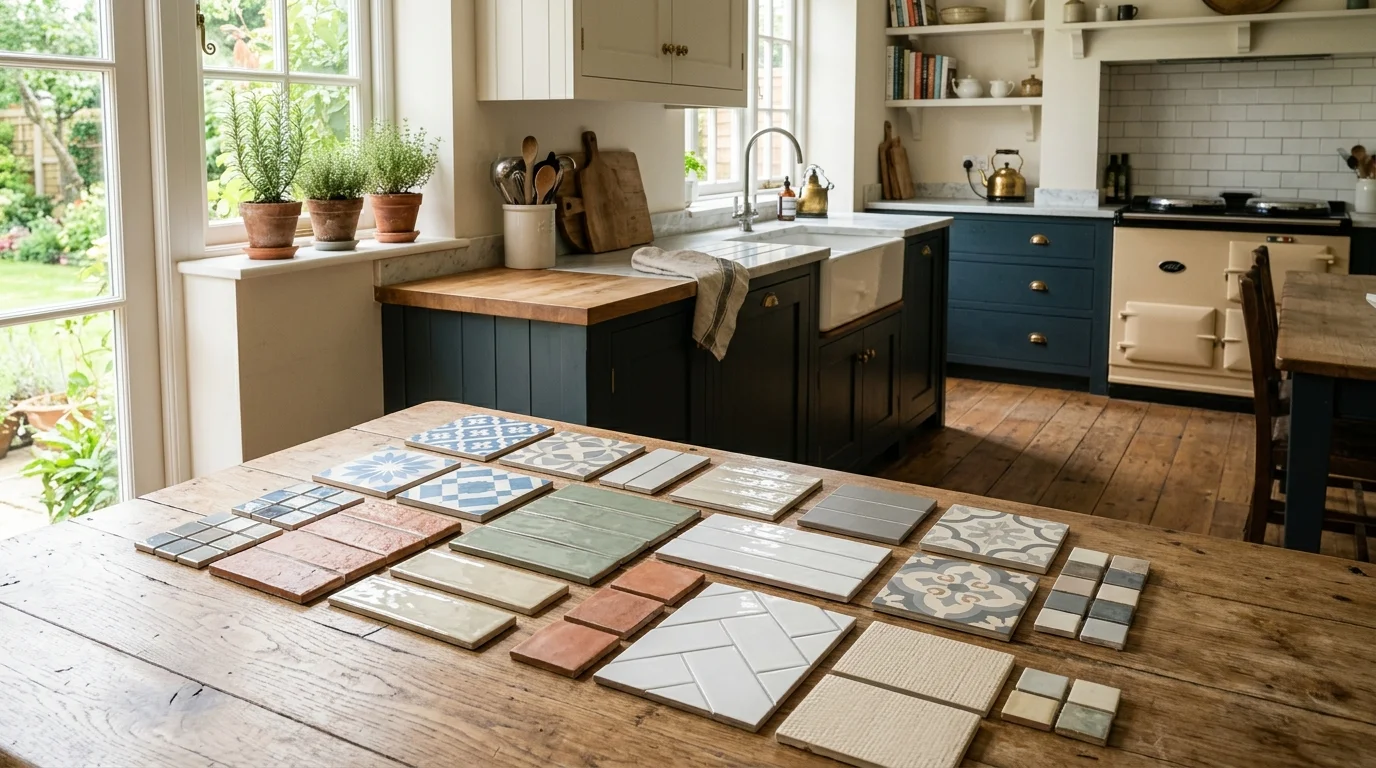
A sample board helps with appearance. It does not replace the technical sheet. A color that works on a vertical display can read differently across a larger floor.
Where ceramic can stay in the running
Ceramic can win a backsplash when the product is approved for that wall, the look fits the room, and the complete quote is clear. “Cheaper” needs more care. We could not confirm a current San Diego market price difference between ceramic and porcelain. Ask each seller or installer to price the exact products in writing. Category-wide price claims also hide differences between collections.
Ask each bidder to identify the same items:
- The exact tile and quantity
- Trim pieces and edge treatment
- Setting and grout materials
- Surface preparation
- Cutting and layout labor
- Expected waste and extra material
- Delivery or pickup terms
A lower tile price does not settle the decision unless the quotes cover the same scope. One proposal might include edge pieces and layout work while another leaves them open.
If ceramic wins on the documented application, the look, and the complete quote, there is no need to reject it because porcelain sounds more premium.
Floors change the answer
Do not carry the backsplash choice onto the floor just to keep the material name consistent. Start over with products whose manufacturers approve them for floor installation.
Layout belongs in that review. Mark the visible edges, cabinet runs, island position, doorways, and transitions on a measured plan. Ask the installer where narrow cuts may appear. Decide whether the pattern should center on the room, a main cabinet run, or another feature before material is ordered.
For more planning points, read our kitchen flooring buying guide. When you are ready to compare installation plans, our kitchen flooring replacement service can match you with a licensed independent kitchen remodel professional.
Building permits may be required depending on the project scope. For a property within the City of San Diego, check the current process with Development Services or call 619-446-5000. For another San Diego County address, confirm requirements with the authority serving that property.
Cutting, waste, and labor
Tile price is only one line in a finished-floor or backsplash proposal. Cutting, layout, preparation, trim, and waste should appear in the comparison before you select a material.
Do not assume porcelain always costs more to cut. Do not assume ceramic always produces less waste. Daltile says porcelain’s density requires specialized tools, which is a labor factor, not a published San Diego price. Ask the installer to calculate both for the actual product, room, pattern, and written scope.
Give each bidder the same plan and tile information. Ask the pro to explain how these details affect the quote:
- Tile dimensions and thickness
- Straight, diagonal, or offset layout
- Cabinet, outlet, doorway, and corner cuts
- Finished edges and trim pieces
- Pattern or color matching
- Material reserved for future repairs
- Preparation included before setting tile
Ask how waste is handled, but do not supply a percentage from a general article. The installer should calculate the order from the measured layout and chosen product. Request that the material quantity and assumptions appear in writing.
Large samples can expose practical design issues before ordering. Place them near the room’s edges and transitions. For a backsplash, compare the tile against outlets, cabinet bottoms, and exposed ends. For a floor, review where cuts meet cabinets, walls, and neighboring finishes.
If two proposals use different quantities or labor descriptions, ask why. One may account for pattern alignment, edge pieces, or an area omitted from the other. The lowest product price and the lowest complete project quote are not automatically the same comparison.
Choosing per surface, not per kitchen
Make a separate decision sheet for each tiled surface. A simple table with “backsplash,” “main floor,” and any other tiled area prevents one product choice from spreading without review.
For every surface, document:
- The exact product number and finish
- The maker’s approved application
- Water absorption, abrasion, and DCOF figures from the sheet
- The available technical sheet
- The selected grout and edge plan
- The proposed layout
- The installer responsible for that scope
- The complete written quote
For a backsplash, give visual fit and edge details serious attention. Confirm wall-use approval for the exact product. Review how the design will finish at cabinets, open walls, counters, and corners. If the tile is not approved for the intended location, remove it from consideration.
For a floor, limit the comparison to products documented for floor use. Then review the installation plan, room measurements, transitions, finish, and quote. Do not let a matching backsplash name override missing floor documentation.
Product selection still happens at the individual property in San Diego County. The address, kitchen plan, selected tile, and installation scope belong in the same review. Avoid relying on advice written for an unnamed room or a different product.
Before hiring, verify the contractor through the CSLB License Check. License verification confirms legal status, not the quality of a design or installation plan. Read the proposal, product documents, exclusions, and contract terms before signing.
The useful answer to porcelain versus ceramic is therefore surface-specific. Ceramic can stay in the running for an approved wall application when its design and actual quote work. For floors, compare only floor-approved products and let documented specifications, layout, and installer review drive the choice.
When to call us
Call when your tile choice affects flooring, a backsplash, cabinets, or a wider kitchen remodel. Modern Kitchen SD is a referral service, and the customer contracts and pays the independent professional directly. Call (858) 400-4623 and we will connect you with a licensed local kitchen remodeler.